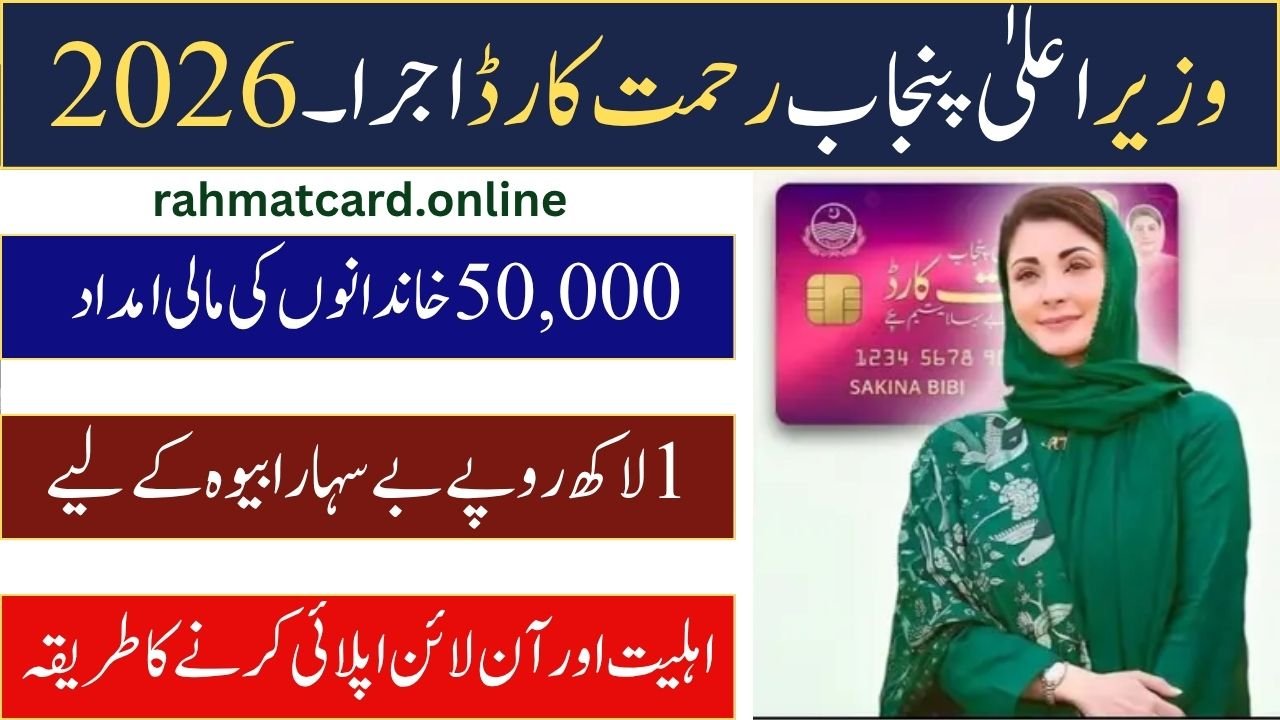
In a major step towards promoting social justice and reducing poverty, the Government of Punjab, led by Chief Minister Maryam Nawaz Sharif, has unveiled the CM Punjab Rehmat Card 2026. This initiative transcends traditional welfare handouts, establishing a structured and digital-first social safety net aimed at delivering financial dignity to the province’s most vulnerable populations, particularly widows and orphaned children.
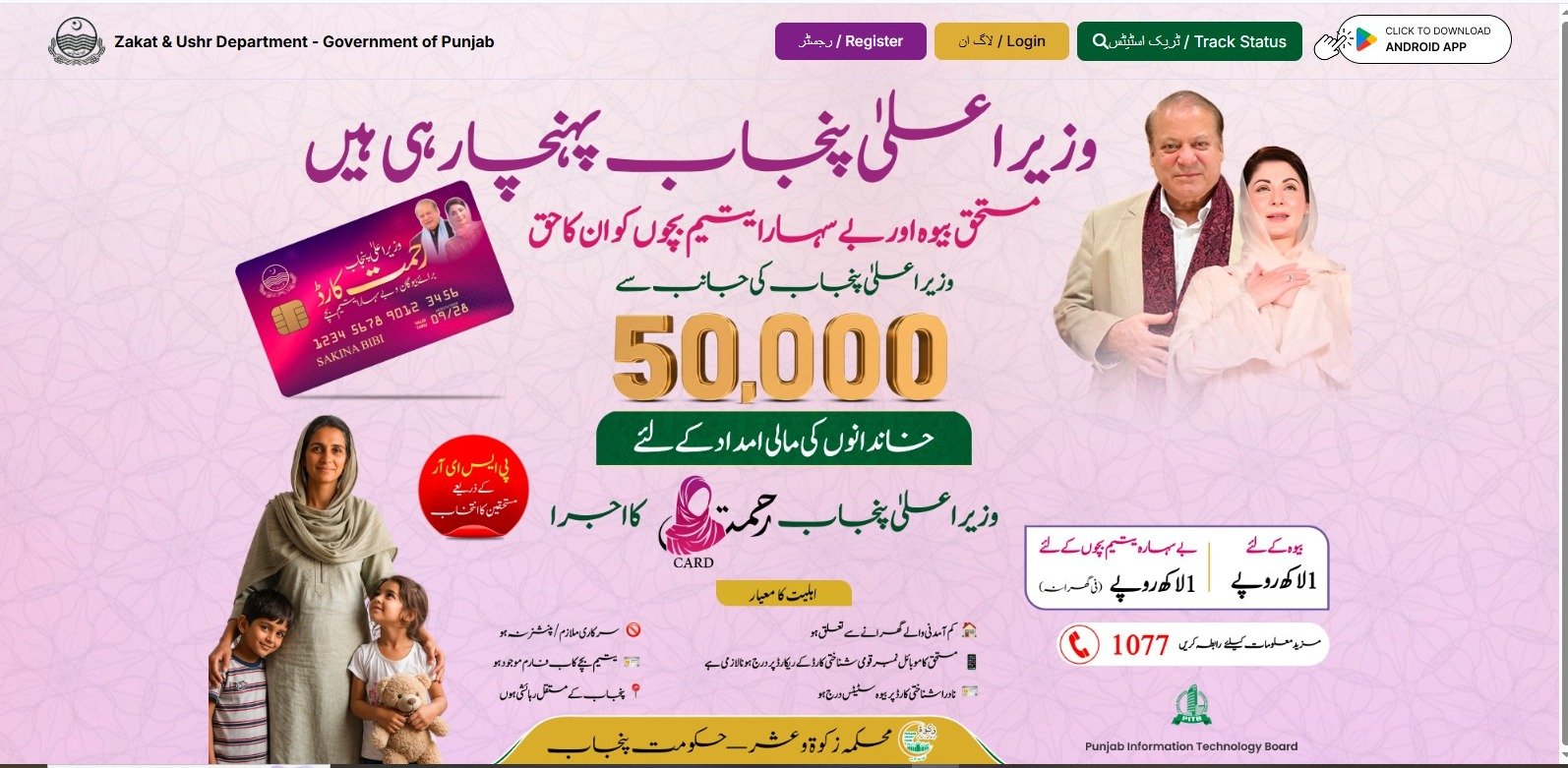
As inflation continues to impact the purchasing power of low-income households, the Rehmat Card serves as a “breathing space” for those who have lost their primary breadwinners. This guide provides a 360-degree view of the program, ensuring that no deserving citizen is left behind due to a lack of information.
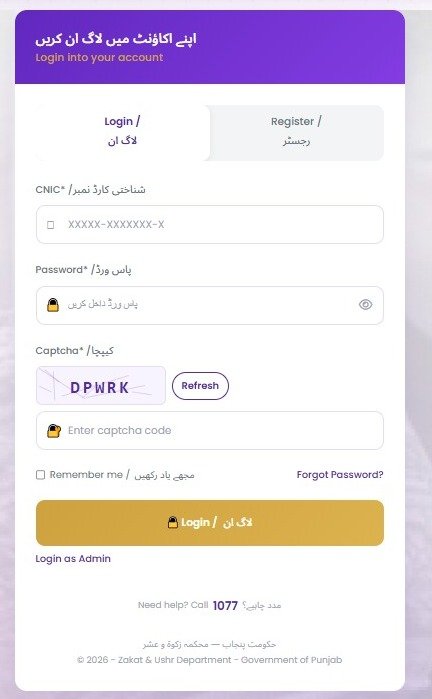
Official Website: rahmatcard.punjab.gov.pk
1. What is the Rehmat Card 2026?
Rehmat Card is an initiative overseen by the Punjab Zakat and Ushr Department, designed to modernize welfare support through a biometric digital system. The program aims to empower widowed women and ensure financial security for orphaned children by offering significant financial assistance. This support covers essential needs such as basic sustenance (food, clothing, utility bills), education to prevent school dropouts among orphans, healthcare for emergency medical costs, and small-scale entrepreneurship opportunities for widows to foster long-term self-sufficiency.
2. Detailed Financial Assistance Structure
In contrast to earlier programs that provided a flat rate of assistance, the 2026 Rehmat Card adopts a tiered approach tailored to the unique needs of families, taking into account the number of dependents they have.
| Category | Grant Amount (PKR) | Purpose |
| Widows with No Children | Rs. 100,000 | Basic financial stability and relief. |
| Widows with One Child | Rs. 125,000 | Support for the mother and child’s welfare. |
| Widows with 2+ Children | Rs. 150,000 | Maximum support for larger households. |
| Orphan Children Support | Rs. 25,000 | Per child, specifically for education and growth. |
| Monthly Assistance | Rs. 10,500 | Ongoing monthly support for ultra-poor families. |
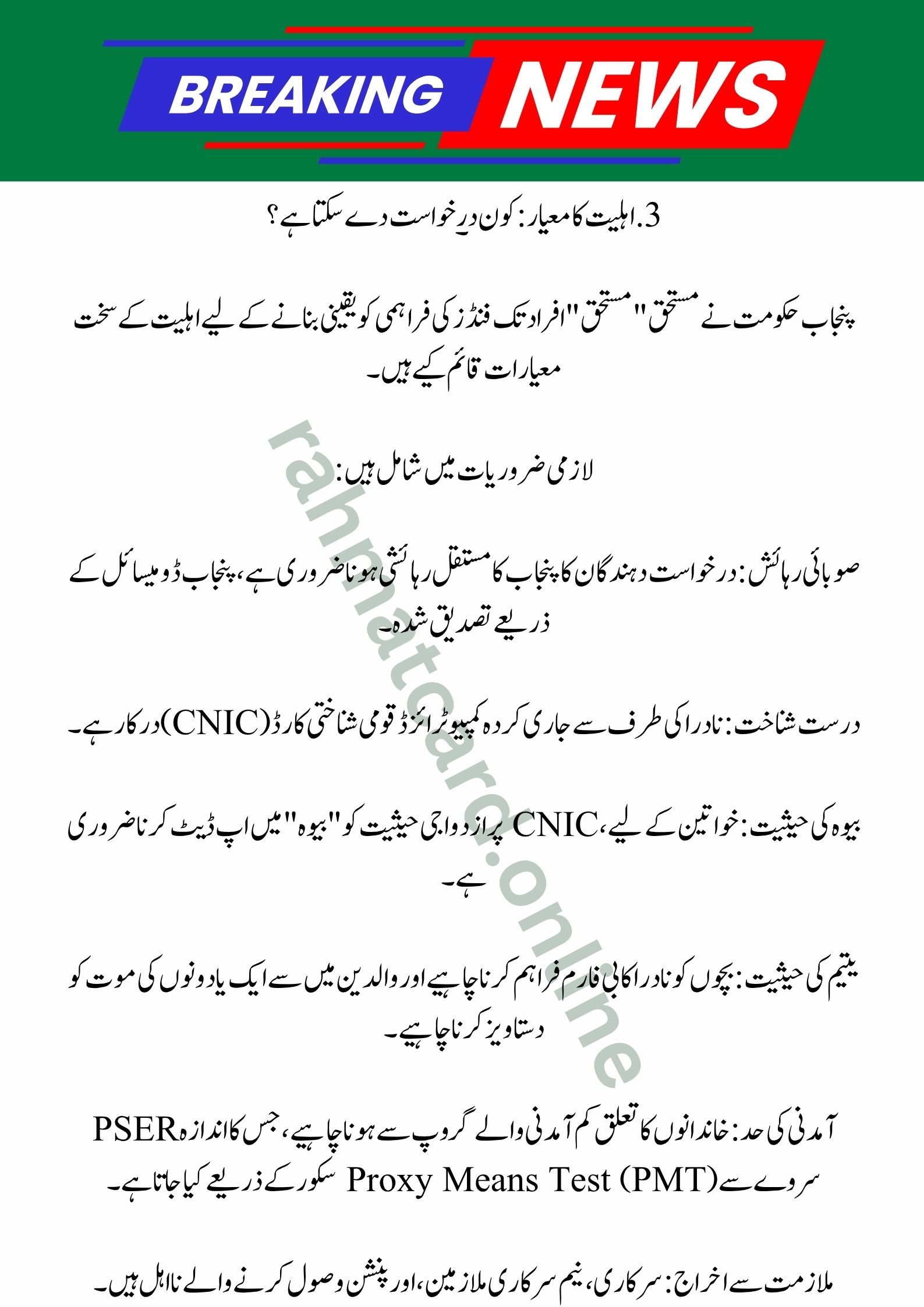
3. Eligibility Criteria: Who Can Apply?
The Punjab government has established strict eligibility criteria to ensure funds reach the deserving “Mustahiq” individuals.
Mandatory requirements include:
Provincial Residency: Applicants must be permanent residents of Punjab, verified through Punjab Domicile.
Valid Identity: A Computerized National Identity Card (CNIC) issued by NADRA is required.
Widow Status: For women, the marital status on the CNIC must be updated to “Widow.”
Orphan Status: Children must provide a NADRA B-Form and document the death of one or both parents.
Income Threshold: Families must belong to a low-income group, assessed via a Proxy Means Test (PMT) score from the PSER survey.
Employment Exclusion: Government, semi-government employees, and pension recipients are ineligible.
4. Mandatory Documents Checklist
Preparation is crucial for a successful application to avoid rejections due to incomplete or unclear documents. Required documents include an original and unexpired CNIC, a death certificate from the Union Council or Local Government, a NADRA B-Form for orphan children, a domicile certificate evidencing residence in Punjab’s 36 districts, a registered SIM card linked to the applicant’s CNIC, and an income affidavit verifying the family’s financial status, typically confirmed by the local Zakat committee.
5. Step-by-Step Registration Process
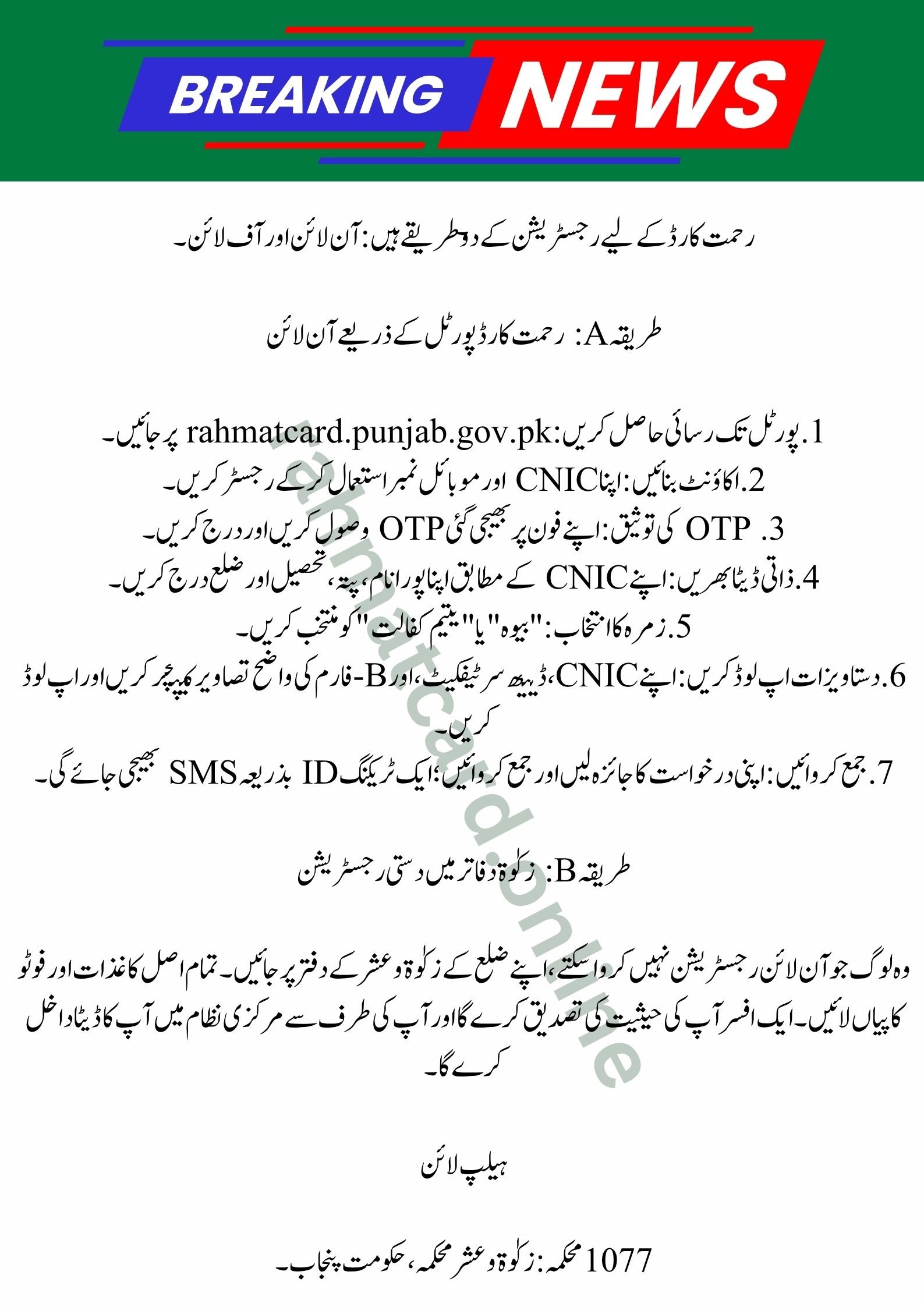
The registration process for the Rahmat Card has two methods: Online and Offline.
Method A: Online via the Rahmat Card Portal
1. Access the Portal: Navigate to rahmatcard.punjab.gov.pk.
2. Create Account: Register using your CNIC and mobile number.
3. OTP Verification: Receive and enter the OTP sent to your phone.
4. Fill Personal Data: Input your full name, address, tehsil, and district as per your CNIC.
5. Category Selection: Select either “Widow” or “Orphan Support.”
6. Upload Documents: Capture and upload clear images of your CNIC, Death Certificate, and B-Form.
7. Submit: Review and submit your application; a tracking ID will be sent via SMS.
Visit your district’s Zakat & Ushr Office. Bring all original documents and photocopies. An officer will verify your status and input your data into the central system on your behalf.
Helpline
1077 Department: Zakat & Ushr Department, Government of Punjab.
6. Understanding the PSER Survey Backbone
- The Punjab Socio-Economic Registry (PSER) serves as the critical database for the government’s welfare programs, such as the Rehmat Card. Its significance lies in its ability to accurately assess poverty levels among applicants, thereby preventing individuals from receiving benefits from multiple schemes unfairly—a situation known as “double-dipping.” Additionally, PSER effectively filters out applicants who possess substantial assets, such as cars, large homes, or a history of overseas travel, ensuring that assistance is directed towards those truly in need.
7. How the Payment System Works
- To combat corruption and eliminate intermediary “cuts,” the CM Punjab Rehmat Card implements a completely digital payment system. Upon approval, recipients receive an SMS from a government code, such as 8171 or a specific departmental identifier. Funds are seamlessly transferred to digital wallets, including services like JazzCash, HBL Konnect, or UBL Omni. For cash withdrawal, applicants are required to visit an authorized agent and present their thumbprint, ensuring that only the legitimate owner accesses the funds.
8. Typical Errors and How to Prevent Them
- To avoid missing out on benefits due to minor errors, follow these guidelines: Ensure your CNIC reflects your accurate marital status, as discrepancies can lead to rejection; use a mobile number registered in your name for OTP and payment alerts to avoid issues; only interact with official websites, specifically .gov.pk, and avoid sharing personal details on unofficial platforms; and when applying for orphan support, make sure all children are included on the NADRA B-Form.
Conclusion
The CM Punjab Rehmat Card 2026 serves as a vital resource for individuals in need, such as widows and orphans, providing them with essential support in challenging circumstances. This initiative simplifies the application process through a user-friendly digital portal at rahmatcard.punjab.gov.pk, eliminating previous bureaucratic hurdles.
Eligible individuals are advised to collect necessary documents and update their NADRA records to register for the card. Community leaders and bloggers should help spread this information to aid deserving members of society.
Official Website: rahmatcard.punjab.gov.pk
(FAQs)
Is there an application cost for the Rehmat Card?
No. The entire procedure, from registration to payment, is totally free. Never pay someone for “form filling” or “approval.”
Can inhabitants of Sindh and KPK apply?
No. This is a provincial plan designed exclusively for Punjab citizens.
What happens if I don’t have a smartphone for online registration?
To register manually, call the helpdesk at 1077 or visit your local Zakat & Ushr office.
How long does the approvals process take?
After submission, verification takes between 15 to 30 days since the data is cross-referenced with NADRA and PSER.
Can I apply if I already receive BISP money?
Yes, you may apply.